Plenty of agencies list “custom software” on a services page. Usually it means one of two things: they will configure a tool somebody else built, or they will hand your project to a development shop you never meet and mark it up. We mean the literal thing. We sit down with how your business actually runs, design a system around it, and write the code ourselves.
Six apps and platforms have come out of this studio — a full business platform for real estate agents, a rental operations platform for landlords, a recreation registration platform for rec centers, a white-label affiliate and referral system, a white-label restaurant rewards platform, and a local events app for the Vail Valley. AgentVue and RentalVue are live on the web and the App Store, Vail Valley Pulse is live on the App Store, RecVue is in private preview, and the other two are still in development. None of them were subcontracted.
What we build
- Custom platforms and client portals. Somewhere your customers, members, or partners log in — with the accounts, permissions, and data your business actually needs, instead of whatever a generic portal product decided to offer.
- Internal tools and dashboards. The thing your team currently runs on a spreadsheet, a group chat, and four browser tabs, rebuilt as software that does not break when the person who invented it takes a vacation.
- SaaS and web applications. A product idea taken from sketch to something strangers pay to use — billing, accounts, onboarding, and all the unglamorous parts in between.
- Custom CRMs and back-office systems. Contact, pipeline, commission, and reporting tools shaped around your workflow rather than the other way around.
- API and data integrations. Getting the systems you already pay for to talk to each other, so the same number stops being typed into three places.
- Database design and automation. The layer underneath that quietly determines whether everything above it holds up in year three.
Built in house, not subcontracted
This is worth being blunt about, because it is the most common way these projects go wrong. A lot of custom software is sold by one company and built by another. The people who understood your business are not the people writing the code, and the gap between those two groups is where budgets go to die — requirements get lost in translation, changes take a week to round-trip, and nobody quite owns the outcome.
Here the person who scopes your project is the person who builds it. That is also why the client roster is deliberately small. It means you get a direct line to the builder instead of an account manager and a ticket queue, and it means the answer to “can we change this?” is a conversation rather than a change order.
You see it before you commit
Before you agree to a build, we design the screens — the actual layout of your actual software, with your workflow in it. Not a wireframe sketch and not a stock template: what the thing would look like to the people who would use it every day.
That happens before you have spent anything on development. It is the fastest way for both of us to find out whether we understand your business, and it turns an abstract conversation about scope into something you can point at and disagree with. Plenty of expensive misunderstandings die quietly at this stage, which is the entire point.
Once the screens are right, the build is quoted at a fixed fee — so the number is settled before you commit to it, not discovered along the way.
The six apps and platforms
AgentVue
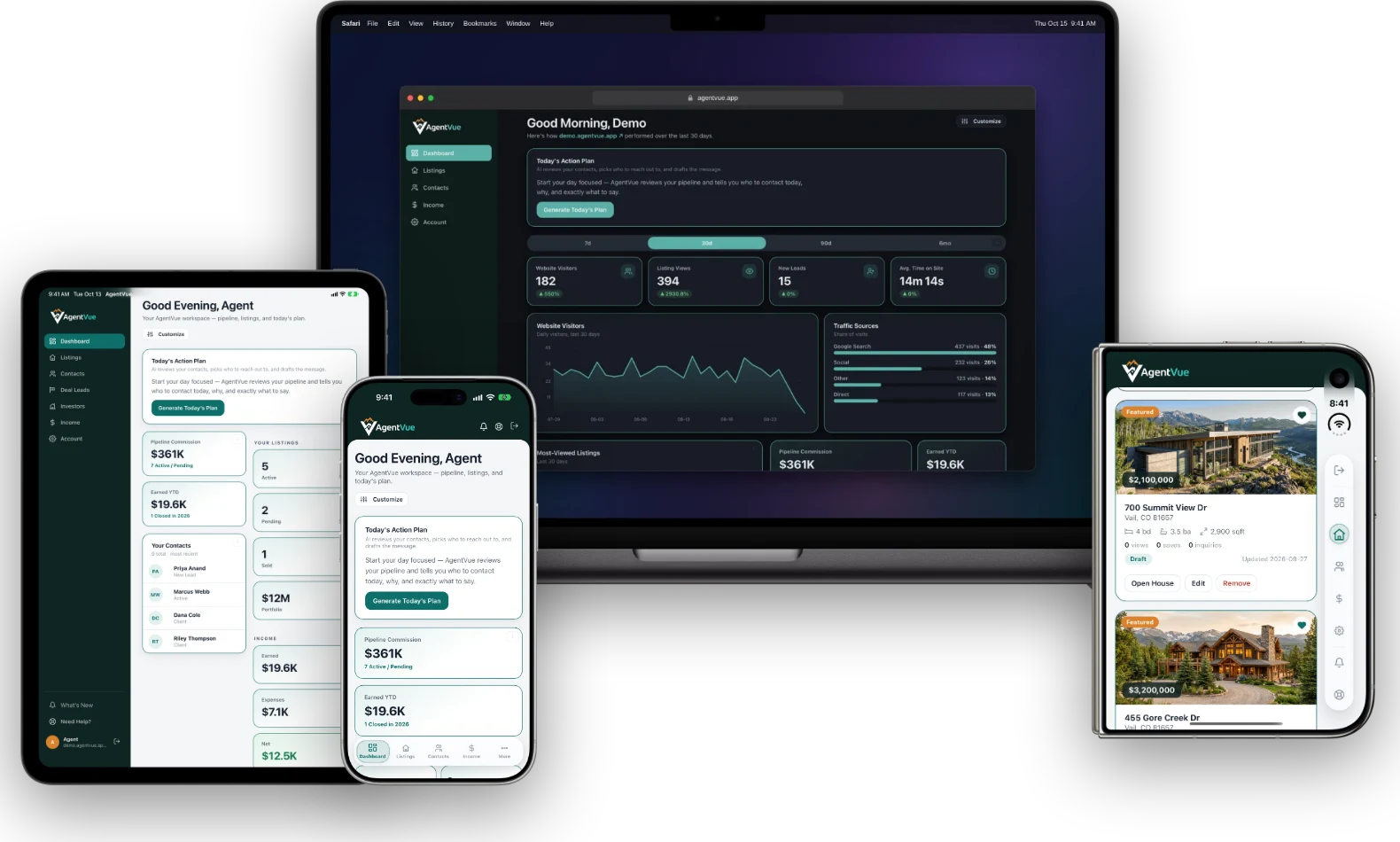
AgentVue is a full business platform for real estate agents — listings, contacts, commissions, analytics, and lead capture in one place, with a native iOS app on the App Store. It is the clearest look at what we build, because it is ours: designed, built, shipped, and maintained here. If you want to see the work rather than read about it, that is the one you can go use.

 Scan to get AgentVue on your iPhone
RentalVue
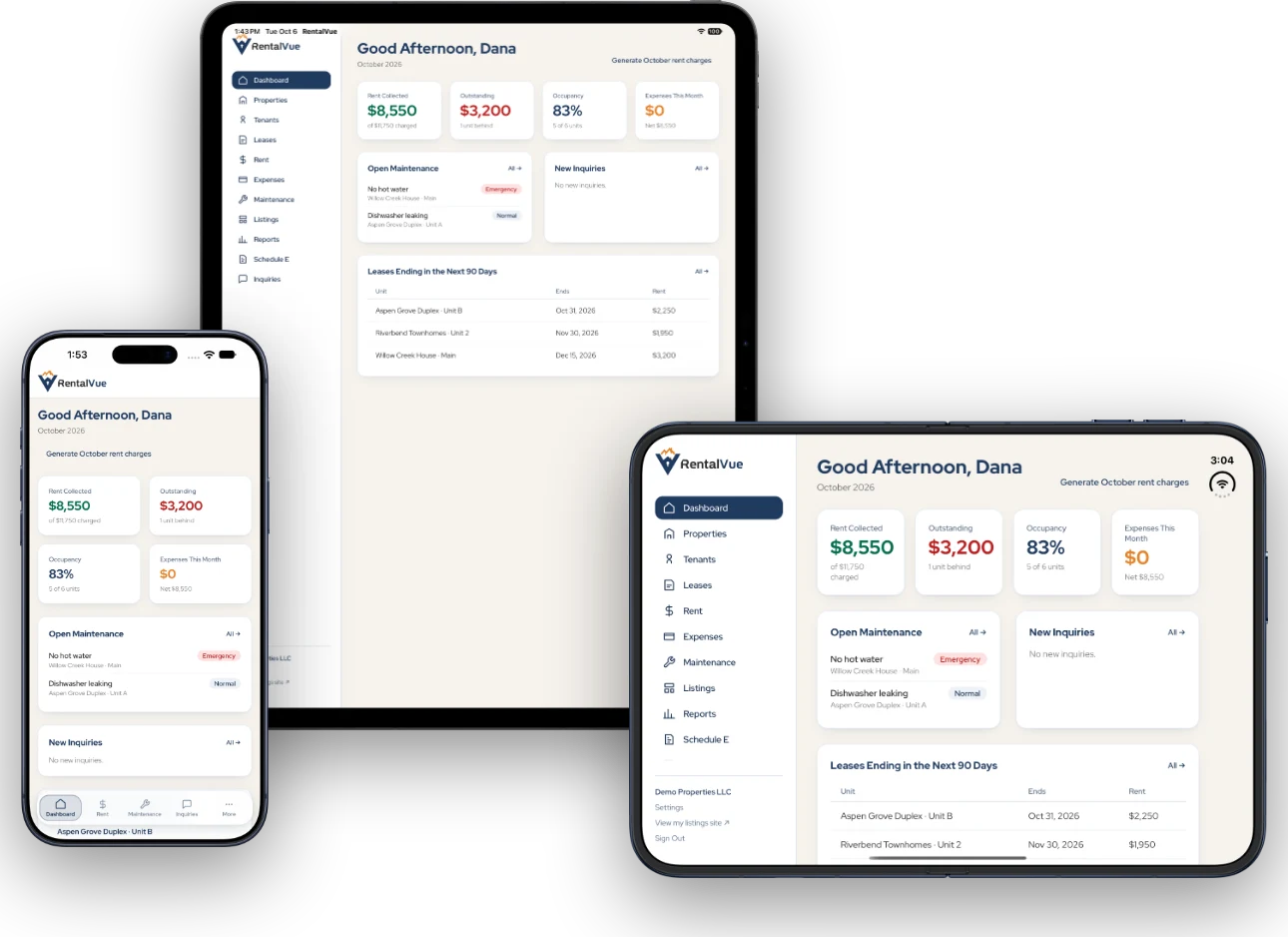
RentalVue is our second product and AgentVue’s sibling: rental operations for landlords with a handful of doors. Properties and units, leases, a rent roll that generates its own charges each month, maintenance, vacancy listings, and expenses filed to Schedule E as they are entered, plus a portal where tenants see their lease and report problems. It is live on the web and on the App Store for iPhone and iPad. Like AgentVue, it is ours, and you can go use it.
 Scan to get RentalVue on your iPhone or iPad
RecVue
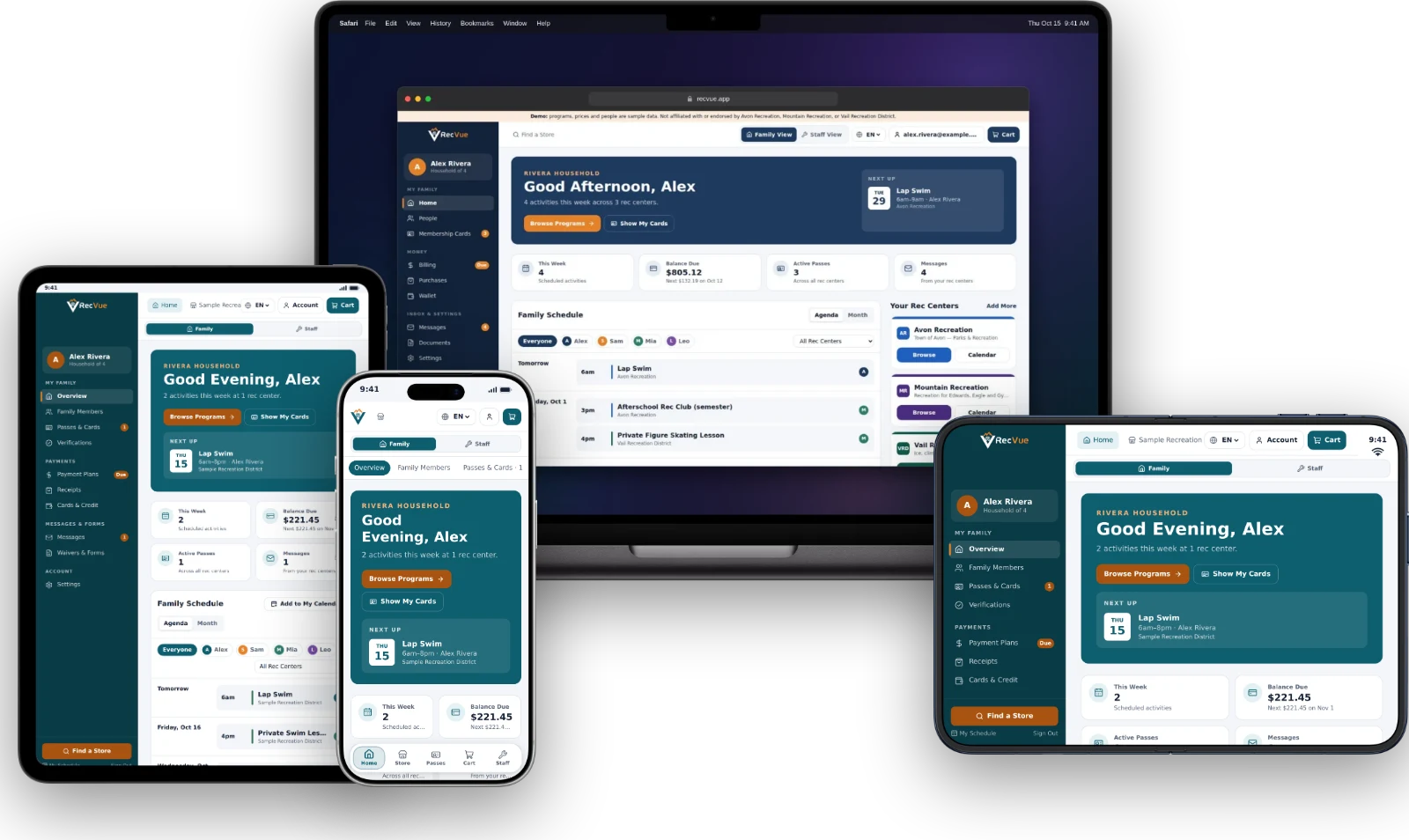
RecVue is our third product: recreation registration built to replace the software rec centers rent today. Families get one household account across every rec center they use — programs, memberships and punch passes, facility bookings, and billing — and rec center staff get a console with front-desk point of sale, scheduling, and accounting exports. A working demo is in private preview with individual rec centers.
ReferVue
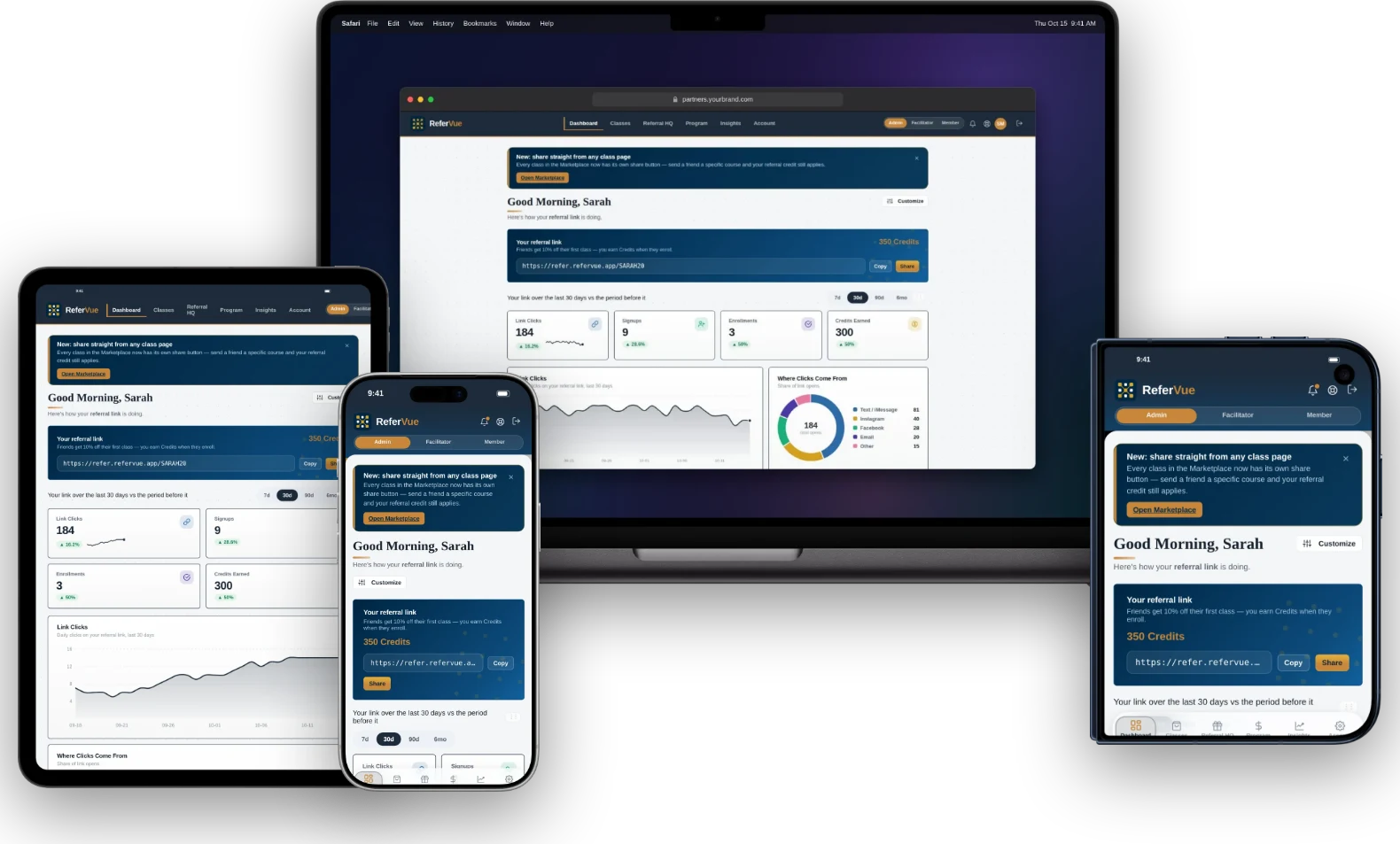
A white-label affiliate and referral platform — partner accounts, referral tracking, and payout reporting, rebranded as each client’s own program. Currently in development; demos by request. It is the same shape of problem as most portal work: multiple user roles, money moving, and reporting that has to be right.
LoyalVue
A white-label rewards program for restaurants and restaurant groups — loyalty, member accounts, and the reporting behind them, under the restaurant’s own brand. Also in development; demos by request.
Vail Valley Pulse
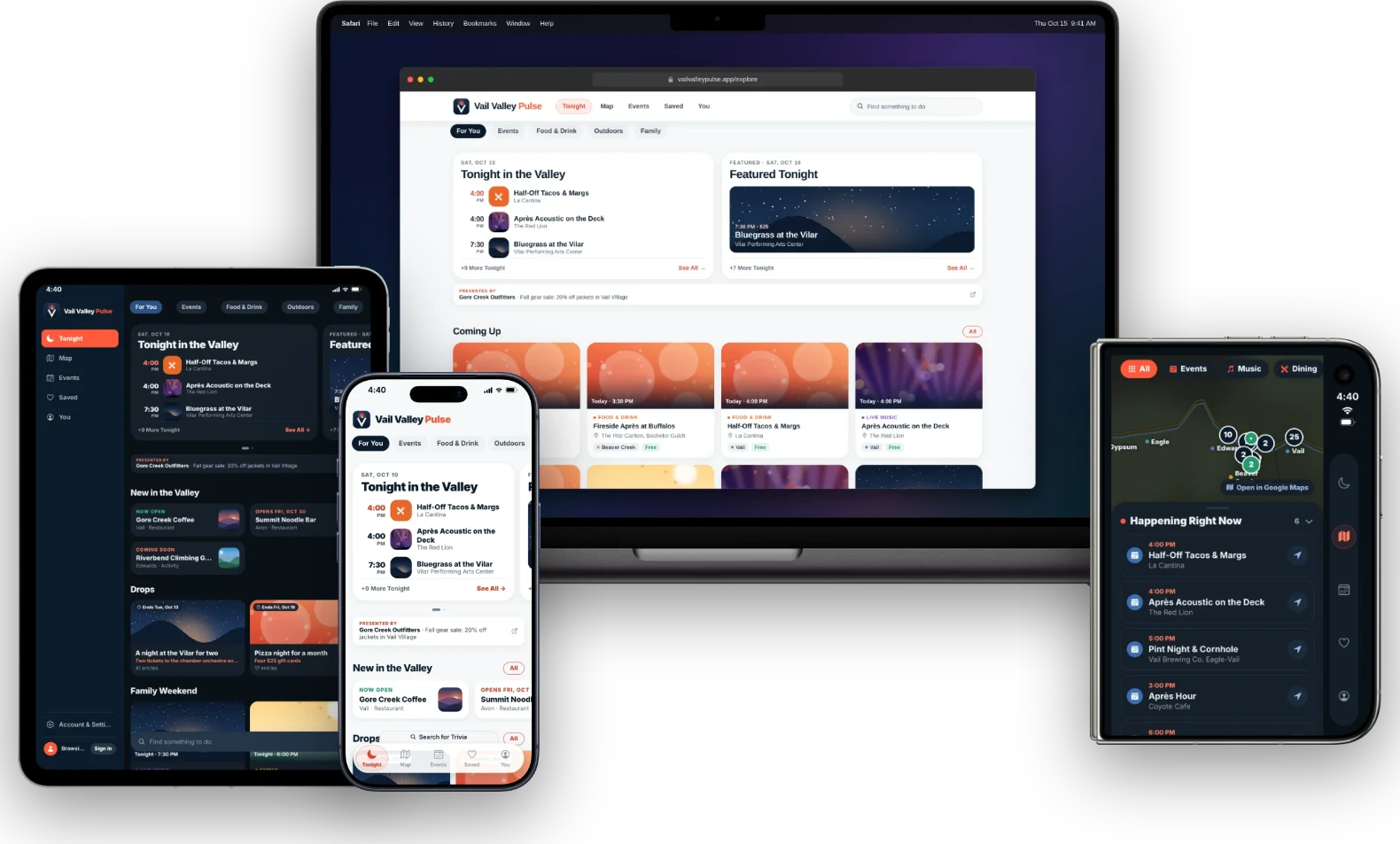
Vail Valley Pulse puts everything happening in Vail, Avon, Beaver Creek, Edwards, Minturn, Eagle, and Gypsum in one app — live music, après, trivia, happy hours, and family events on one shared calendar. Businesses post their own listings from a web portal and their followers get a push notification the moment they do. Free on the App Store now, with Android coming soon.
 Scan to get Vail Valley Pulse on your iPhone
All six are systems you cannot buy off a shelf in the shape their owners need. That is usually the moment custom starts making sense.
When custom is the right call — and when it isn’t
Off-the-shelf software is faster, cheaper, and maintained by someone else. For common problems it is almost always the right answer, and we will tell you so rather than sell you a build you did not need. Accounting, email, payroll, scheduling — buy those.
Custom starts to pay when one of these is true:
- You are paying for three or four tools that do not talk to each other, and someone on your team is the integration.
- Per-seat pricing is scaling faster than the revenue those seats produce.
- The workflow is the thing that makes you competitive, and no product on the market models it.
- You have outgrown the spreadsheet, and the next step up is either a six-figure enterprise system or something built for you.
- You need to own the data and the relationship, not rent them from a platform that can change terms.
What it costs
Honestly: it depends on scope, and any firm number quoted before scoping is a guess dressed up as a quote. What actually drives cost is how many distinct user roles the system has, how much data it moves, what it has to integrate with, and whether anything needs to happen in real time.
What we can commit to is process. You see designed screens before you commit to anything, the build is then quoted at a fixed fee so the number is settled up front, and ongoing care is a monthly plan rather than an open-ended invoice. If the conversation turns up that you would be better served by something you can buy off the shelf, we will say that.
How the work goes
- Scope. A working session on how the business actually runs — not a requirements form. This is where most of the value gets decided.
- Design. Screens first — you see mockups of your own software, free, before you commit to building it. Nothing is abstract by the time money is involved.
- Build. Shipped in usable pieces. You see working software early and often, rather than a status report for three months.
- Launch. On infrastructure in your name, with your team trained on it.
- Maintain. Hosting, security updates, and changes as the business changes — on a monthly plan, by the people who built it.
Common questions
Can I see what it will look like before I commit?
Yes — that is how we’d rather do it. We design the key screens first and walk you through them before you have committed to a build. If the design does not match how your business actually works, far better to find that out on a screen than three months into development.
Who owns the code and the data?
Vail Digital does, unless we agree otherwise in writing. You get a license to use the software for as long as you are a client. Taking your data with you is built into our apps: AgentVue and RentalVue users can export their data at any time, and Vail Valley Pulse gives businesses export options. On a custom build, data export is set out in your agreement. If you want to own the software outright, that is an option — you can buy a copy of one of our white-label platforms, or arrange to own software we build for you, agreed in writing in your proposal or contract.
How long does it take?
A focused internal tool or portal is weeks. A full multi-role platform is months. The first working version almost always arrives well before the finished one, which is deliberate.
Do you work with clients outside Colorado?
Yes. We are based in Vail and work with clients nationwide — software is not a local-only service. If you are in the Vail Valley, we will happily do the scoping session in person.
Do you still build websites?
Yes — custom websites and ongoing care plans are still very much what we do. The difference is that when the site needs to do something no plugin does, we do not have to tell you it is impossible.
Tell us what you’re trying to build
A short conversation about the problem — what it would take, roughly what it would cost, and whether custom is even the right answer. If it is, you’ll see designed screens of it before you commit to anything.
Or email [email protected] with a paragraph about the problem.